
When severe weather approaches, every second matters. Your family needs a safe place to go, and getting there should not create another challenge.
For years, many homeowners pictured an underground storm cellar when they thought about tornado protection. However, today’s above-ground concrete storm shelters and steel safe rooms offer another way to prepare. These modern options combine strong construction, convenient access, and practical designs that fit different homes and properties.
At Fain Storm Shelters, we believe protecting your family should feel simple. As a family-owned business for three generations, we help homeowners find dependable shelter options that meet their needs. Whether you want an outdoor concrete shelter or an indoor steel safe room, understanding the differences can help you choose with confidence.
Why Above-Ground Concrete Shelters Are a Safer Modern Option
Choosing a storm shelter involves more than finding a strong structure. You also need to consider how quickly your family can reach it during an emergency.
Above-ground concrete storm shelters offer a practical option for homeowners who want dependable protection without having to climb underground.
Easy Access When Every Second Counts
During a tornado warning, your family may have only minutes to reach safety. Therefore, a shelter with easy entry can make a meaningful difference.
Unlike traditional underground shelters, above-ground concrete shelters do not require homeowners to climb down a staircase or ladder.
This design can make access easier for older adults, young children, and people with limited mobility. Additionally, Fain offers wheelchair-accessible shelter options for families with specific needs. When everyone can reach the shelter safely, your emergency plan becomes easier to follow.
Strong Concrete Construction Built for Severe Weather
Above-ground concrete storm shelters use durable construction to protect against dangerous weather. However, concrete strength alone does not determine whether a shelter offers reliable tornado protection. Proper engineering, doors, anchoring, and installation also play important roles.
Fain Storm Shelters focuses on durable concrete construction and designs intended to exceed applicable FEMA safety guidance. As a result, homeowners can choose a shelter that combines strong materials with practical everyday access.
Convenient Installation Without a Major Construction Project
Installing a storm shelter shouldn’t mean weeks of disruption. Fortunately, Fain Storm Shelters offers one-day delivery and installation for qualifying projects. Once installation is complete, you can use the shelter right away.
Before installation, our team reviews the property and discusses site preparation. This helps homeowners understand what their chosen location requires. For families who want to prepare before the next severe weather season, a straightforward installation process offers another important benefit.
Steel Safe Rooms: A Smart Choice for Homes With Limited Space
Not every property has enough outdoor space for a large concrete storm shelter. Likewise, some homeowners prefer protection inside their existing home. That’s where steel safe rooms shine.
Indoor Protection Close to Your Family
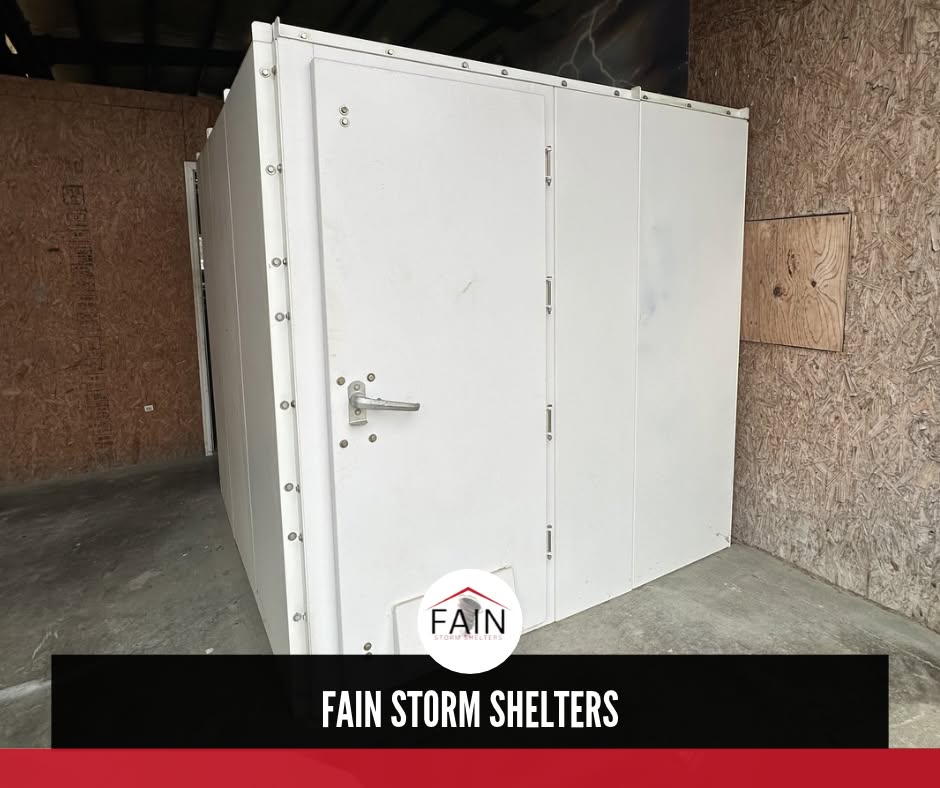
Steel safe rooms provide a designated shelter space inside a home or garage. Because these rooms can fit within existing structures, homeowners may not need to set aside a separate area of their yard.
For example, a garage-installed steel safe room offers convenient access while preserving much of your property’s outdoor space. More importantly, an indoor location may reduce how far your family has to travel during a tornado warning.
Strong Steel Construction in a Practical Design
Steel safe rooms use engineered steel components to create a protective space. However, choosing the right model involves more than checking steel thickness.
The door, locking hardware, anchoring system, and overall design must work together. Proper installation also matters because a safe room needs a secure connection to its supporting structure.
Fain Storm Shelters offers steel safe rooms for homeowners who want strong protection in a practical location.
A Good Fit for Different Household Needs
Every household has different priorities. Some families want a shelter close to their bedrooms. Others prefer a garage location that lets them enter quickly without going outside.
Additionally, homeowners with smaller properties may find that a steel safe room fits their available space better than an outdoor concrete shelter. Before choosing a location, consider how every family member will reach the room during severe weather.
The best location offers a suitable installation site and a clear, dependable path to safety.
How Above-Ground Shelters Avoid Common Underground Safety Issues
Underground storm shelters can provide effective tornado protection when properly designed and installed. However, they also come with challenges that homeowners should consider. Above-ground concrete shelters offer a different approach by removing the need to enter a below-ground space.
Less Concern About Water Entering a Below-Ground Shelter
Water management is a key part of owning an underground storm shelter. Heavy rain, poor drainage, and groundwater can cause problems when homeowners don’t maintain the surrounding area.
Fain’s shelter maintenance guidance emphasizes regular upkeep to help prevent leaks, condensation, and other moisture-related issues. Above-ground concrete shelters avoid many concerns tied specifically to below-ground placement.
No Underground Stairs or Ladders
Climbing into an underground shelter can become difficult during an emergency. Wet steps, limited lighting, and mobility challenges may slow entry. Furthermore, carrying a small child or helping an older family member down a staircase can add stress.
Above-ground shelters eliminate the need for underground stairs. As a result, families can focus on reaching their shelter rather than navigating a difficult entrance.
Easier Access After Severe Weather
A tornado can leave fallen trees, damaged buildings, and scattered debris across a property. Depending on the location, debris may block either an above-ground or underground shelter entrance.
However, an above-ground entrance avoids some access challenges associated with below-ground openings. For this reason, homeowners should carefully consider shelter placement and keep the entrance area clear. A well-planned location can help make the shelter easier to use before and after a storm.
The Key Features That Make a Storm Shelter FEMA-Compliant
When shopping for a tornado shelter, you will likely see references to FEMA standards and storm shelter compliance. Understanding these terms helps you ask better questions before you buy.
FEMA Guidance and ICC 500 Standards
FEMA provides guidance for designing and constructing safe rooms that protect people during extreme wind events. Its updated publication, FEMA P-361 (2024), addresses safe room design and construction for tornadoes and hurricanes.
Meanwhile, ICC 500 establishes minimum design and construction requirements for storm shelters. Although people often use the phrase “FEMA-approved shelter,” FEMA does not generally approve or certify individual storm shelter products.
Instead, buyers should look for documentation showing that the shelter design meets the applicable requirements.
Proper Engineering and Structural Strength
A storm shelter must withstand more than strong winds. Flying debris, pressure changes, and forces acting on the structure can all affect its performance.
Therefore, the shelter’s walls, roof, doors, connections, and anchoring system must work together. When comparing options, ask about engineering documentation and testing that supports the shelter’s claimed performance.
Secure Doors and Reliable Entry
The shelter door is one of its most important components. A strong structure cannot provide its intended protection if the door fails during a storm.
Consequently, doors and their hardware must meet the requirements for the shelter’s design. Homeowners should also ensure everyone in the household knows how to open, close, and secure the door.
Correct Installation and Anchoring
Even a well-engineered shelter needs proper installation. For example, a steel safe room may require specific anchoring to a suitable concrete foundation. Likewise, an above-ground concrete shelter needs an installation method appropriate for its design and site.
Before installation, the property should receive a careful review. Fain Storm Shelters works with customers to discuss site access, ground conditions, and preparation requirements.
Accessible Entry and Appropriate Shelter Space
A safe room should accommodate the people who plan to use it. That includes enough space for household members and an entrance they can navigate during an emergency.
For families with mobility needs, wheelchair-accessible storm shelters may offer a more practical solution. However, accessibility features and formal ADA compliance are not the same thing. Buyers should confirm the specific requirements that apply to their project.
Protection Without Going Outside
One of the biggest advantages of an indoor safe room is its location. During severe weather, homeowners may not need to cross the yard to reach shelter.
Instead, they can move directly to a designated safe space inside the home or garage, depending on the layout. This can be especially helpful when heavy rain, lightning, or strong winds arrive before a tornado warning.
A Practical Option for Smaller Properties
Some homes have limited yard space, nearby property lines, or landscaping that makes it hard to place an outdoor shelter. In these situations, a steel safe room may offer more flexibility.
Additionally, indoor placement lets homeowners keep more of their outdoor space for everyday use.
Above-Ground Concrete Shelter vs. Steel Safe Room: Which Is Right for You?
Both options can provide strong tornado protection when they meet applicable safety requirements and are installed properly. However, each offers different advantages.
An above-ground concrete storm shelter may be a better fit if you have suitable outdoor space, want durable concrete construction, or need an accessible entry option.
On the other hand, a steel safe room may make more sense if you prefer indoor access, have limited outdoor space, or want a shelter inside your garage or home.
Before deciding, consider your household size, mobility needs, available space, and preferred shelter location. Also, ask about installation requirements, maintenance, and documentation showing that the shelter meets applicable safety standards.
Ultimately, the right shelter should fit your property and make it easier for your family to reach safety.
Protect Your Family With Fain Storm Shelters
A storm shelter is one of those investments you hope you never need. However, when severe weather arrives, having a dependable place to go can make all the difference.
For three generations, Fain Storm Shelters has helped families prepare with durable concrete storm shelters and steel safe rooms.
We offer above-ground concrete shelters, steel safe rooms, hillside shelters, and commercial storm shelter solutions. Our one-day installation service also helps qualifying customers prepare without a lengthy construction process.
Whether you live in Tennessee, Mississippi, Alabama, or another area we serve, our team can help you compare your options.
Call Fain Storm Shelters to talk through the right shelter for your family.
731-424-1114 or 1-888-527-7700
fainstormshelters.com