
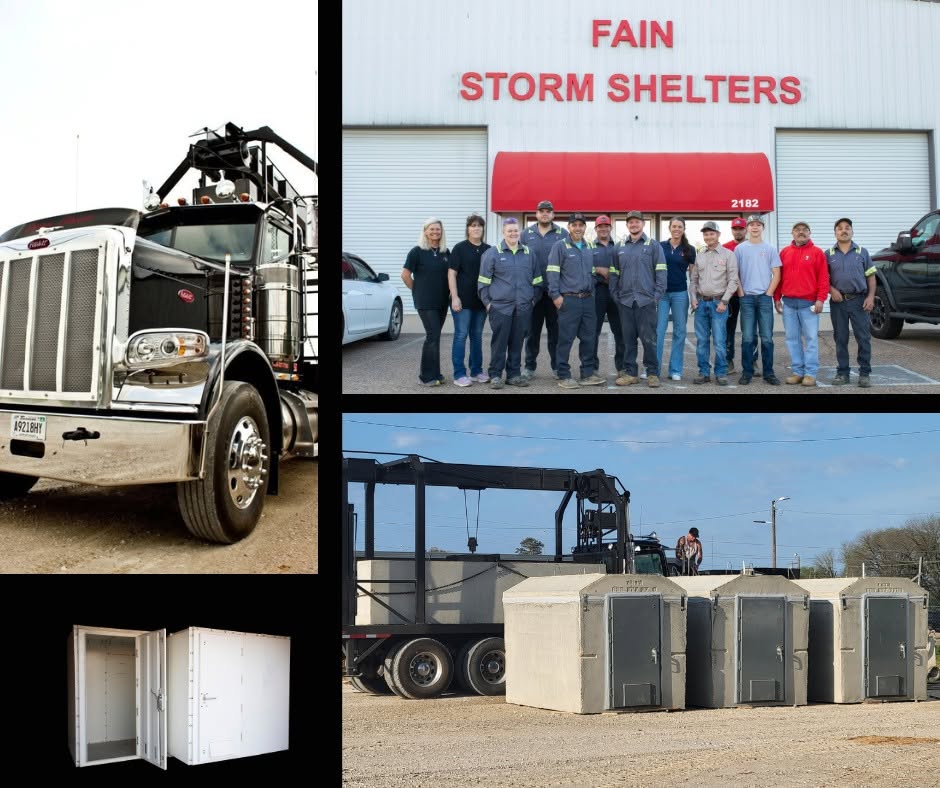
Buying a storm shelter is a big decision. However, the installation itself does not have to become a lengthy construction project. At Fain Storm Shelters, our shelters are delivered and installed in one day. When our crew leaves, your shelter is ready to use. That gives families, businesses, fire departments, and communities a faster way to implement dependable storm protection.
Still, a one-day installation does not mean we simply arrive and hope everything works. Preparation matters. Before delivery day, we review access, shelter placement, buried utilities, soil conditions, drainage, and other factors that can affect the installation.
Here is what you can expect before, during, and after your Fain storm shelter installation.
1. What a One-Day Storm Shelter Installation Really Looks Like
One-day storm shelter installation starts well before the delivery truck reaches your property. Before arrival, a member of our team goes over a pre-installation checklist with you. We want to know where the shelter will go, whether our equipment can safely reach that location, and whether anything on the property could create a problem.
Then, on installation day, the shelter arrives on a modified semi-tractor truck. Because our concrete shelters are precast, the shelter itself arrives as a completed structure rather than being poured and built from the ground up at your property.
The truck carries a crane-operated rigging system that lifts the shelter directly from the back. Once lifted, the unit can be rotated as needed to help position it at the prepared location. Depending on the shelter and property, additional installation equipment may also be required. As a result, we can complete many installations without turning the property into a construction site for days or weeks. Most importantly, the shelter is ready to use when our installation crew leaves.
For a homeowner, that means less disruption around the house. For a business, fire department, municipality, or community organization, a shorter installation window can also make it easier to add storm protection without creating an unnecessarily long interruption.
2. The Steps We Take Before, During, and After Your Shelter Install
A smooth storm shelter installation depends on getting the details right from the beginning.
Before Installation
First, we help you think through shelter placement and site access.
Our delivery truck needs a clear path from the road, driveway, or alley to the installation site. Fain requires a minimum clear path width of 10 feet and a height of 14 feet. Additionally, enough room must be available for the truck to turn or back into the site when necessary. Tree limbs, roof overhangs, power lines, phone lines, fences, and other obstacles should all be considered before delivery day.
Buried utilities matter too. Before installation, you need to know the locations of water, gas, sewer, septic, internet, and phone lines. Water meters and septic tanks should also be identified to prevent heavy equipment from traveling over them.
Furthermore, soil conditions can change the installation plan. Our crews may need to dig with an excavator or drive anchors into the ground, depending on the shelter. Rock, slabs, or large boulders can prevent equipment from working as intended. Therefore, if you know your property has rocky soil, let our team know ahead of time so we can discuss your options.
During Installation
Once our crew arrives, we evaluate the site conditions before moving the truck and equipment into place. The shelter is then moved from the delivery truck using the crane and rigging system. Depending on the shelter type, excavators, tractors, or other equipment may also be part of the process.
Ground conditions are especially important on installation day. A storm shelter and the equipment used to deliver it are heavy. Wet or soft ground can create ruts and make access more difficult. For that reason, we do not recommend delivery when site conditions are too wet or soft.
After Installation
Once the shelter is properly installed, it is ready for use. However, owning a storm shelter also comes with an ongoing responsibility. Just like other important parts of your home or property, a storm shelter needs regular attention and maintenance.
Fain recommends treating your shelter as a long-term investment in your family’s safety. Regular upkeep can help prevent problems that arise from years of neglect. A fast installation gets your shelter in place. Consistent care helps you protect that investment for the years ahead.
3. How We Prepare Your Property for an Above-Ground or Hillside Shelter
Not every property is the same. Consequently, shelter placement should never be treated as a one-size-fits-all decision.
Preparing for an Above-Ground Concrete Storm Shelter
Above-ground concrete storm shelters are an important part of Fain’s current shelter lineup. They also provide an accessible option for customers who want to avoid stairs and underground entry. Before installation, we consider whether the truck can safely reach the selected location. We also need to know about buried utilities, overhead obstacles, soil conditions, slopes, and anything else that could interfere with the delivery equipment.
If sand, rock, or another material is being placed beneath the shelter, the preparation generally only needs to cover the shelter’s footprint. Meanwhile, nearby ditches or slopes may require temporary boards or other materials so the truck can approach on a more level path. The goal is simple: prepare a clear, stable installation area before the shelter arrives.
Preparing for a Hillside Storm Shelter
Hillside storm shelters require additional attention to the land itself. For example, drainage needs to be considered carefully. Water runoff from the property, including gutter runoff from nearby buildings, can affect the soil surrounding a hillside installation. Excess water can wash away dirt over time, so proper drainage and adequate covering over the shelter remain important after installation.
We also consider the slope, soil, rock, equipment access, and surrounding property. If you are unsure whether a particular area will work, you do not have to figure it out on your own. Fain can review emailed property photos or map images. In some cases, properties within 50 miles of our main office may also qualify for an on-site review by a team member. Planning ahead helps prevent surprises when installation day arrives.
4. Why Speed Matters When Installing a Storm Shelter
One-day installation is convenient, but convenience is only part of the story. Severe weather does not wait for a construction schedule. A storm shelter is similar to other safety measures you put in place before an emergency. You hope you never need it. Nevertheless, when severe weather arrives, you want a safe place available.
That is why getting the shelter delivered, installed, and ready to use matters. Fain has built one-day delivery and installation into the way we serve customers. Instead of stretching a typical installation over multiple days, our process is designed to install the shelter efficiently once the property is properly prepared. For homeowners, that means less time dealing with equipment and installation activity around the property.
Meanwhile, speed can be especially valuable for commercial and community customers. Fire departments, cities, counties, businesses, mobile home communities, and other organizations have people, schedules, and daily operations to consider. A streamlined installation can make adding storm protection easier to plan around. Speed should never replace preparation. Instead, good preparation is what makes an efficient installation possible.
5. The Quiet Advantages of Precast Shelters You May Not Know About
When people hear “precast concrete storm shelter,” they often focus on the concrete itself. However, the precast design also plays an important role in how the shelter is delivered to your property.
Less On-Site Construction
A precast concrete shelter arrives as a formed structure. Therefore, much of the shelter construction has already taken place before the delivery truck reaches your property. That reduces the amount of construction required at the installation site.
Faster Installation
Because the structure arrives ready for placement, the crew can focus on positioning and installing the shelter rather than building the concrete structure on-site. That process is one reason Fain can offer one-day delivery and installation.
Consistent Concrete Construction
Concrete is central to Fain’s storm shelter lineup, including above-ground and hillside options. The company’s precast approach combines durable concrete construction with an installation process designed around efficiency.
Flexible Property Options
Precast concrete shelters are not limited to a single property layout. Fain offers above-ground and hillside solutions, which give customers options based on accessibility, terrain, available space, and property needs. For customers who need another type of solution, Fain also offers steel safe rooms for garages and homes, as well as commercial and community shelter options.
Preparation Makes One-Day Installation Possible
A storm shelter installation may happen in one day, but a successful installation starts with planning. Clear truck access, known utility locations, suitable soil, good drainage, stable ground, and the right shelter placement all help our crew complete the job safely and efficiently. In turn, that preparation helps reduce delays and unnecessary disruption on installation day.
Fain Storm Shelters has been family-owned for three generations. Today, we serve residential, commercial, and community customers with above-ground concrete shelters, hillside shelters, steel safe rooms, and larger shelter solutions. Our goal is not simply to put a shelter on your property. We want to help you choose a solution that fits your property and provides a safe place for the people who depend on it when severe weather threatens.
Call us to talk through the right shelter for your family, business, or community: 731-424-1114 or 1-888-527-7700.